
For decades, designing that exterior meant navigating a grueling tug-of-war between an architect’s sweeping creative vision and the engineer’s strict budget spreadsheets. But if you have been paying attention to the architecture industry lately, you already know that a new collaborator has entered the studio: Artificial Intelligence.
We are way past the phase of AI just generating “pretty, dream-like pictures.” Today, AI tools are fundamentally optimizing how modern facades are designed, tested, and built. Here is how this technology is reshaping the face of our cities.
Speeding Up the “What If” Think about the traditional concept phase. An architect has an idea for a twisting, geometric tower with a dynamic glass facade. Modeling that concept, applying materials, rendering the lighting, and presenting it took days—sometimes weeks. If the client wanted to see it in a different cladding? Back to the drawing board.
Now, the workflow is almost instantaneous. By leveraging advanced workflows in ComfyUI or maintaining strict geometric control over building structure with ControlNet, designers can generate incredibly precise, photorealistic variations in minutes. Want to see how reclaimed timber panels look against brutalist concrete? Just type it in. Platforms like Leonardo AI and Higgsfield allow design teams to iterate through hundreds of visual possibilities, testing color palettes and material combinations before a single 3D model is even fully built. It completely removes the creative bottleneck, allowing the best ideas to rise to the top instantly.
Brains Behind the Beauty: Performance Optimization But a modern facade can’t just look good; it has to perform. Buildings are massive energy consumers, and the exterior skin dictates how much heating, cooling, and artificial lighting the interior will need.
This is where AI flexes its analytical muscles. Modern generative design tools don’t just sketch a building; they analyze the environment it will sit in. AI algorithms can instantly calculate the optimal window-to-wall ratio based on the specific latitude, climate, and sun path of the site. They can design parametric shading systems—like fins or louvers—that automatically block harsh summer glare while allowing warm winter sunlight to penetrate the glass. By simulating years of environmental stress in seconds, AI helps design facades that actively lower a building’s carbon footprint and energy costs.
Bridging the Gap Between Blueprint and Reality
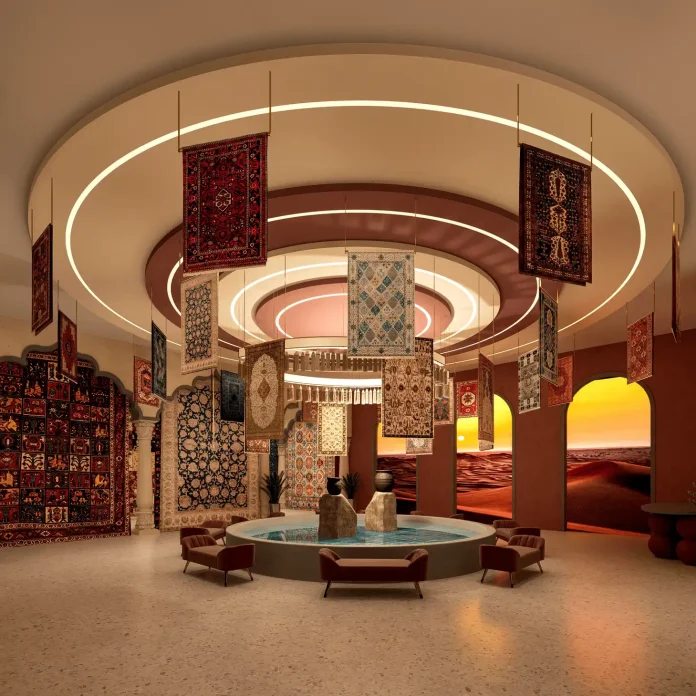
There is a well-known trait amongst the people: most clients cannot read 2D blueprints. They struggle to visualize how a flat drawing will translate into a towering, three-dimensional space. AI-enhanced workflows are bridging this communication gap perfectly. It’s exactly why architectural visualization studios like ArchCGI utilize the latest digital tools to translate raw data and complex structural ideas into breathtaking, hyper-realistic imagery. When a developer or a city planner can look at an image and practically feel the texture of the terracotta panels or see exactly how the evening sunset will reflect off the glass, hesitation disappears. High-quality visualization builds client confidence and speeds up project approvals.
How do you feel about AI stepping into the architectural design process? Are you excited to see more data-driven building facades, or do you prefer the old-school approach? Let us know your thoughts in the comments below, and don’t forget to share this post with your network!