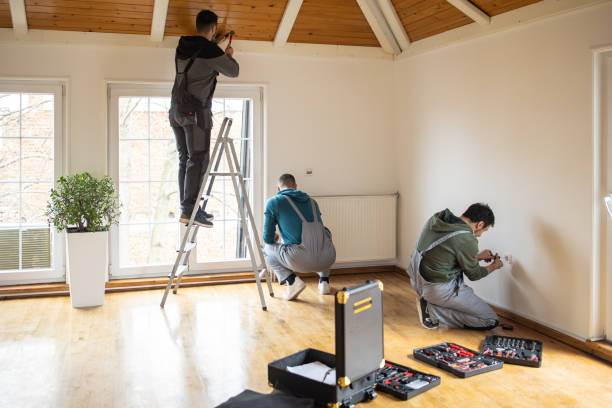

Getting It Right From the Start Saves You From Getting It Wrong Later
There is a version of every electrical installation story that ends badly — the one where a homeowner hired the cheapest guy available, the work was done quickly without permits, and three years later a home inspector flags the whole thing as a safety hazard during a sale. Or worse, the one where something fails catastrophically. The better version of that story starts with hiring a licensed electrician who treats every installation like it might be inspected by the most thorough inspector in the state — because it might be.
Whether you are wiring a new home from scratch, adding circuits to an existing house, or installing an entirely new panel after a service upgrade, the quality of the installation work determines how safely and reliably your electrical system operates for decades. This is not a category where “good enough” is actually good enough.
New Construction Electrical Installation Done Right
A professional electrical installation service on a new construction project involves far more than running wire through walls. It starts during the framing stage with a detailed layout of every outlet, switch, fixture, and circuit based on the specific needs of each room. Bedrooms need certain outlet placements per code. Kitchens require dedicated circuits for major appliances. Bathrooms need GFCI protection. Garages, workshops, and outdoor spaces each have their own requirements.
Experienced installation electricians coordinate with other trades — the HVAC contractor, the plumber, the cabinet installer — to ensure that electrical work does not conflict with other systems and that all parties end up with the clearances and access they need. This kind of coordination is something you learn from years of working on construction projects, not from reading a manual.
Panel Installation and Service Upgrades
The electrical panel is the brain of your home’s power system. Every circuit originates there, and every electrical device in your home ultimately depends on that panel operating correctly. Older panels — particularly those made by manufacturers like Federal Pacific or Zinsco that have well-documented safety issues — should be replaced regardless of whether they are currently causing obvious problems.
Service upgrades, which increase the amperage capacity of the electrical service entering your home, are increasingly common as homeowners add EV chargers, whole-house generators, heat pumps, and other high-draw equipment. A 100-amp service that was perfectly adequate for a 1970s home is often stretched dangerously thin in a modern household running all of these loads simultaneously. Upgrading to 200 or even 400 amps is a significant project but one that pays dividends in safety and capability for as long as you own the property.
EV Charger and Generator Installations
Two of the most common installation requests electricians in the Southaven area receive today involve electric vehicle chargers and whole-house standby generators. Both are straightforward projects for an experienced electrician and both involve considerations that make DIY installation a genuinely bad idea.
Level 2 EV chargers require a dedicated 240-volt circuit, proper wire gauge for the amperage draw, and — in most jurisdictions — a permit and inspection. Installing one correctly takes a few hours for a licensed electrician. Installing one incorrectly can void your vehicle warranty, create fire hazards, and fail to pass inspection if you ever sell the home. Generator installations involve proper transfer switch installation to prevent backfeed into the utility lines — a safety requirement that protects both your household and utility workers.
Lighting and Fixture Installations That Elevate a Space
Lighting installation is where electrical work and interior design intersect. A well-designed lighting plan — combining ambient, task, and accent lighting across a space — makes rooms more functional, more visually appealing, and more comfortable to spend time in. Recessed can lighting, pendant lights over kitchen islands, under-cabinet lighting, bathroom vanity lighting, and smart lighting systems all require proper installation to work safely and look right.
Outdoor lighting installation adds both security and curb appeal — path lights, security floods, landscape spotlights, and porch fixtures all need to be installed with weatherproofing appropriate for their exposure and wired on circuits with GFCI protection. These are not complicated projects individually, but the cumulative effect of a well-executed outdoor lighting plan on the appearance of a property at night is remarkable.
Permits, Inspections, and Why They Protect You
Many homeowners are tempted to skip the permit process for electrical work to save time and money. This is a shortsighted decision that creates real problems down the road. Unpermitted work is a disclosure requirement in most real estate transactions — buyers and their agents will ask, and lying on a disclosure form creates significant legal exposure. More practically, unpermitted electrical work means no inspection, which means nobody verified that the work was done correctly and safely.
Permitted electrical installations go through inspections that catch mistakes before they become embedded in your walls permanently. That oversight is valuable, not bureaucratic. A good electrical installation service pulls permits routinely and welcomes inspections because their work holds up to scrutiny every time.