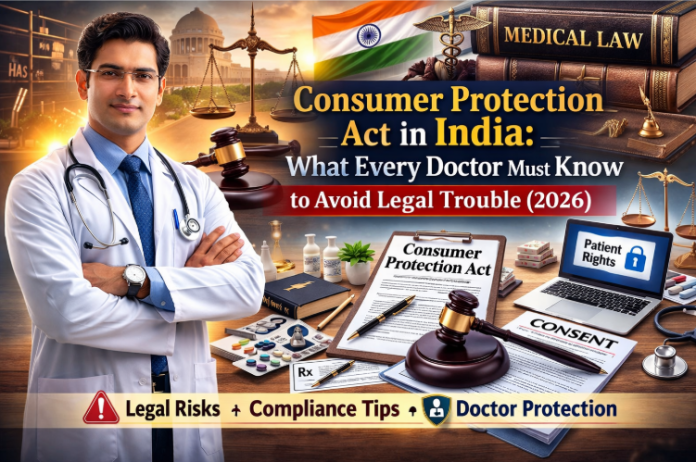


In recent years, the healthcare landscape in India has undergone a significant shift. Patients today are more aware of their rights, and legal actions against healthcare providers are steadily increasing. What many doctors fail to realize is that under the Consumer Protection Act (CPA), they are considered service providers and can be held accountable for any deficiency in service.
This evolving legal environment makes it essential for doctors, clinic owners, and healthcare professionals to understand how the Consumer Protection Act in healthcare India impacts their daily practice. A lack of awareness can lead to serious legal consequences, even when the intention behind treatment is correct.
Understanding the law is no longer optional—it is a critical part of modern medical practice.
1. What is the Consumer Protection Act in Healthcare?
The Consumer Protection Act, 2019, is designed to safeguard the rights of consumers against unfair practices and deficiencies in services. In the context of healthcare, patients are treated as consumers, and doctors, hospitals, and clinics fall under the category of service providers.
This means that any dissatisfaction related to treatment, diagnosis, or patient care can be legally challenged under the Act.
Unlike criminal negligence cases, CPA cases are often easier to file and can result in financial compensation claims, making them a common legal route for patients.
2. How the Consumer Protection Act Applies to Doctors in India
Many doctors assume that legal action only arises in extreme cases of negligence. However, under CPA, even minor lapses can lead to complaints.
A doctor may face legal action in situations such as:
- Misdiagnosis or delayed diagnosis
- Incorrect or inappropriate treatment
- Lack of proper informed consent
- Poor communication with patients
- Inadequate documentation of medical records
Even when clinical decisions are correct, failure to maintain proper documentation or communication can weaken a doctor’s defense in legal proceedings.
3. Common Legal Mistakes Doctors Make
One of the biggest reasons doctors face legal trouble is not malpractice, but avoidable mistakes in routine practice.
Here are some common errors:
- Incomplete Documentation: Missing case details, prescriptions, or treatment history
- Verbal Consent: Not taking written informed consent before procedures
- Overpromising Results: Creating unrealistic patient expectations
- Ignoring Patient Communication: Not addressing patient concerns clearly
- Lack of Follow-Up: Failing to monitor post-treatment progress
These mistakes may seem minor, but they can significantly impact legal outcomes if a case is filed.
4. Legal Consequences Under the Consumer Protection Act
The implications of a CPA complaint go beyond just financial penalties. Doctors may face:
- Compensation Claims: Patients may demand significant monetary compensation
- Reputational Damage: Legal cases can harm professional credibility
- Mental Stress: Ongoing litigation can affect personal and professional life
- Time and Financial Loss: Legal proceedings require time, resources, and legal support
In many cases, even a single complaint can have long-term consequences on a doctor’s practice.
5. How Doctors Can Stay Legally Safe
The good news is that most legal risks under CPA are preventable with the right approach.
Here are practical steps doctors can follow:
- Maintain Detailed Records: Document every consultation, diagnosis, and treatment step
- Obtain Written Consent: Always take informed consent before procedures
- Communicate Clearly: Explain risks, benefits, and outcomes in simple language
- Follow Standard Protocols: Stick to evidence-based medical practices
- Avoid Overcommitment: Do not guarantee results or outcomes
A proactive approach not only reduces legal risks but also builds trust with patients.
6. Why Legal Awareness is No Longer Optional for Doctors
Healthcare in India is becoming increasingly regulated, and patients are more empowered than ever before. With easy access to legal platforms and consumer courts, even small issues can escalate quickly.
Doctors today are expected to balance clinical expertise with legal awareness. Relying solely on medical knowledge is no longer sufficient to protect one’s practice.
To truly safeguard themselves, healthcare professionals must understand the legal framework governing their profession and apply it in daily practice.
7. Strengthening Your Practice Through Medical Law Knowledge
While basic awareness is helpful, structured learning in medical law and ethics provides deeper insights into real-world legal challenges faced by doctors.
Enrolling in a medical law and ethics course in India can help healthcare professionals understand:
- Legal responsibilities in patient care
- Risk management strategies
- Documentation best practices
- Ethical decision-making in complex cases
Such training equips doctors with the knowledge needed to confidently handle legal situations and avoid costly mistakes.
Conclusion
The Consumer Protection Act has transformed the way healthcare services are viewed in India. Doctors are no longer just caregivers—they are also accountable service providers under the law.
Understanding how the Consumer Protection Act in healthcare India works is essential to avoid legal trouble and maintain a safe, ethical practice. By focusing on proper documentation, clear communication, and informed consent, doctors can significantly reduce their legal risks.
In today’s environment, combining medical expertise with legal awareness is the key to long-term success and professional security.
About the Author
Dr. Arvinder Singh is a globally recognized board-certified cosmetic dermatologist, TEDx speaker, and three-time world record holder. He is the Chairman of international boards such as IMBBS (UK) and IBCD (London), and leads Panacea Disability Activists, Arth Diagnostics and Arth Skin & Fitness in Udaipur.
With a strong focus on bridging the gap between medicine and law, he offers a Professional Excellence in Medical Law and Ethics Course, designed to help doctors, healthcare professionals, and organizations navigate legal complexities, ensure compliance, and build a legally secure medical practice.