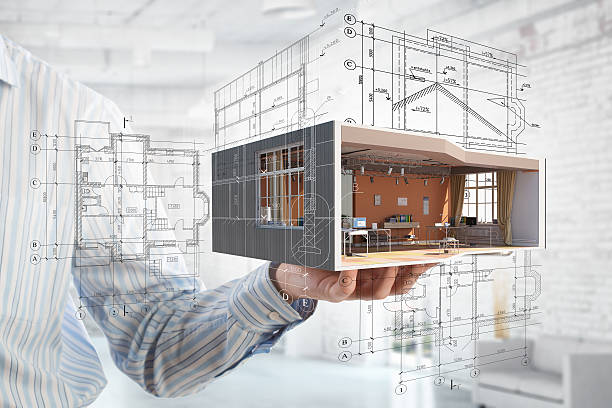

In an era dominated by rapid consumption and ephemeral digital trends, true craftsmanship stands out like a beacon. Whether we look at grand civic structures, intricate physical collectibles, or carefully engineered cinematic scenes, the common thread running through all lasting creative works is an obsessive dedication to detail.
Japan’s creative history offers perhaps the clearest example of this dedication. Across centuries of artistic evolution, Japanese creators have maintained a holistic view of design. To them, the physical space an individual occupies, the tactile objects they touch, and the visual stories they consume are not separate phenomena; they are interconnected expressions of human emotion and spatial awareness.
1. Spatial Precision and the Structural Blueprint
Every masterpiece, regardless of scale, begins with an understanding of spatial boundaries. Before a single physical material is laid, a creator must map out how form interacts with emptiness, how light moves across surfaces, and how a human observer will emotionally register the composition.
When a visionary architect plans a physical space, their goal is to turn concrete, steel, and glass into an immersive experience. They must calculate not only the structural loads and physical durability, but also the psychological journey of the occupant. Key structural elements that define this experience include:
- Axis and Orientation: Aligning pathways and doorways to frame natural vistas, capturing seasonal sunlight, or creating rhythmic focal points.
- Volumetric Contrast: Juxtaposing low-ceilinged passageways with expansive, light-drenched chambers to provoke feelings of intimacy followed by liberation.
- Material Harmony: Combining raw textures like untreated wood, stone, and brushed metal to engage the sense of touch as well as sight.
In classical Japanese design, this balance is expressed through the relationship between building structures and gardens. The interior space does not end at the glass or sliding screen; it bleeds naturally into the external landscape, treating the surrounding garden as an extended room. This approach emphasizes that physical structure is merely a framework designed to hold light, air, and human awareness.
2. The Art of Micro-Scale Sculpture: Engineering the Intangible
If structural design dictates how we move through large spaces, scaled figurine design dictates how we interact with objects up close. The human eye is remarkably adept at detecting flaws in scale, posture, and expression. Creating a miniature representation that feels alive rather than mechanical requires a level of engineering precision that rivals industrial prototyping.
Consider the meticulous labor required to produce a collectible japanese doll or high-end figurative model. A sculptor working in this domain cannot simply shrink human proportions; they must subtly adjust scale and angle to account for how light hits small surfaces.
Technical Challenges in Precision Model Fabrication
Manufacturing Phase
Design Discipline
Objective
Proportion Engineering
Anatomical Sculpting
Balancing realistic human skeletal structure with stylized visual dynamics
Tooling & Parting
High-Precision Mold Design
Splitting complex character models into seamless components for flawless casting
Polymer Tuning
Material Chemistry
Formulating high-grade resins that capture fine hair strands while resisting warping
Surface Staging
Layered Paint Application
Applying subtle gradient airbrushing to mimic the soft diffusion of light on skin
The mastery involved in these micro-objects relies on understanding material physics. A tall figure posing dynamically must have its weight distributed precisely across its mounting points to prevent physical fatigue over time. Furthermore, the choice of matte versus glossy surface finishes dictates how the object reflects the room’s ambient light, breathing physical presence into synthetic polymers.
3. Cinematic Staging: The Geometry of Visual Impression
Translating physical three-dimensional presence into flat two-dimensional media presents its own unique set of artistic challenges. A camera lens distorts depth, flattens background perspective, and changes how light behaves. Therefore, cinematic directors and production designers must artificially reconstruct space to create a convincing illusion of reality.
In modern Japanese visual media, spanning mainstream dramatic television, high-concept cinema, and the commercial AV industry, spatial composition is the secret to viewer engagement. Sets are not built merely to look pretty; they are engineered to create depth, direct sightlines, and establish visual intimacy.
Fundamentals of Set Staging and Camera Geometry
- Framing Within Frames: Using structural elements like doorways, window grids, or hanging textiles to frame subjects, instantly establishing visual hierarchy.
- Depth Layering: Positioning key prop elements across three distinct visual planes—foreground, midground, and background—to trick the human eye into perceiving three-dimensional depth on a flat screen.
- Light Temperature Separation: Mixing warm focal lighting on primary subjects with cool background fill lighting to create physical contrast and separation.
When a visual production masters these techniques, the viewer forgets they are looking at pixels on a screen. The lighting feels real, the space feels tangible, and the narrative emotional resonance is magnified.
4. The Modern Synthesis: Where Physical and Digital Worlds Meet
We are currently witnessing a historic shift in how art, architecture, and media are created. The traditional boundaries between physical trades and digital design are dissolving, replaced by unified workflows that allow ideas to pass freely between virtual and real-world realms.
Consider how these once-isolated disciplines now share identical digital languages:
- Photorealistic Rendering Engines: Software originally built for digital visual effects is now routinely used by building designers to test natural lighting conditions at different times of day before groundbreaking.
- Additive Manufacturing: Advanced multi-material 3D printers enable physical sculptors to turn intricate digital models into physical prototypes with sub-micron accuracy in hours.
- Virtual Set Technologies: Visual media productions now utilize real-time rendering on massive LED stage walls, allowing real cameras to interact with virtual environments seamlessly.
This evolution does not render classical craftsmanship obsolete. On the contrary, it places a higher premium on human taste and foundational knowledge. A digital artist who understands real-world structural physics, light refraction, and material density will always create vastly superior work compared to an operator relying solely on automated tools. 5. The Eternal Human Element: Why Precision Resonates
Why do we care so deeply about the subtle details in our environment, our art objects, and our visual media? Why spend hundreds of hours perfecting the curve of a roofline, the paint gradient on a miniature sculpture, or the lighting angle on a film set?
The answer lies in our innate drive for order, beauty, and authentic connection. In a world increasingly saturated with disposable consumer goods and low-effort digital media, creations made with uncompromising discipline offer a grounding sense of value. When we encounter something built with true precision, we respond to several fundamental attributes:
- Intention: Recognizing that every choice—from material selection to lighting temperature—was made purposefully.
- Proportion: Feeling the natural satisfaction of visual ratios that reflect structural logic and natural balance.
- Integrity: Appreciating the commitment required to execute a vision without taking short cuts or compromising on raw material quality.
Final Thoughts: The Legacy of Integrated Craftsmanship
When we step back and examine the full spectrum of human creation, we see that the divisions between disciplines are largely artificial. A skyscraper piercing the clouds, an exquisite collectible figure sitting on a display shelf, and a beautifully lit scene on a screen are all fruits of the same tree.
Designers, sculptors, and filmmakers all work with the same core ingredients: space, form, light, and human emotion. By cultivating an eye for these foundational principles, we can look past surface labels and appreciate the extraordinary craftsmanship that shapes our modern world. In doing so, we become active participants in a culture that values beauty, precision, and lasting quality over the fleeting noise of the everyday.