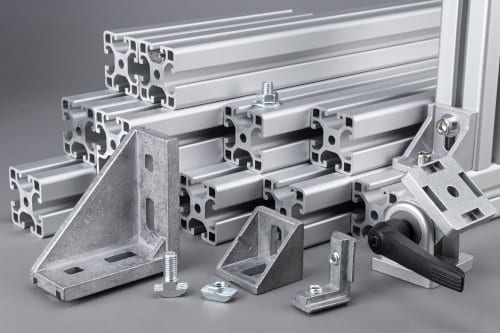

Laboratory spaces demand stability, cleanliness, and flexibility all at once. Equipment must remain secure while researchers adjust layouts to meet new testing goals. MiniTec Aluminum Framing has become a common solution in these settings because it blends structural strength with adaptable design.
Noncorrosive Frames Hold up in Controlled Lab Settings
Research environments often involve controlled humidity, chemical vapors, and strict air quality standards. Structural materials must resist corrosion to prevent contamination or deterioration. MiniTec extruded aluminum framing provides a noncorrosive surface that withstands long-term exposure to these conditions without rusting or flaking. Unlike untreated steel, extruded aluminum T slot systems maintain their integrity without constant repainting or protective coatings. This durability reduces maintenance demands and protects sensitive instruments mounted to the frame. Stable support ensures laboratory equipment remains level and secure throughout daily operation.
Clean Profiles Fit Well with Sterile Environments
Laboratories prioritize smooth, minimal surfaces that do not trap dust or debris. T slot aluminum extrusion systems feature streamlined profiles that align with sterile design requirements. The clean geometry supports a tidy appearance while minimizing crevices where particles could collect. Design consistency also matters in regulated facilities. MiniTec Aluminum Framing integrates seamlessly with stainless benches, cabinets, and protective panels. Its uniform finish contributes to a cohesive environment that supports inspection and compliance standards.
Modular Rails Allow Quick Equipment Adjustments
Research goals shift frequently. A bench that supports one experiment today may need to accommodate new tools tomorrow. T slot extrusion designs allow components to slide, reposition, or expand without welding or permanent alterations. This modular flexibility reduces downtime during equipment changes. Technicians can adjust mounting brackets or add accessories along the rail system without dismantling the entire structure. MiniTec extruded aluminum framing supports this adaptability, helping laboratories stay responsive to evolving projects.
Strong yet Lightweight Support for Test Stations
Laboratory stations often hold analyzers, microscopes, and calibration tools that require stable mounting. MiniTec Aluminum Framing delivers strength through engineered profiles while remaining lighter than traditional steel frameworks. Lightweight construction simplifies installation and relocation. Even large support structures can be assembled on-site without heavy lifting equipment. This balance of strength and reduced weight enhances both structural reliability and workspace efficiency.
Easy Cable Routing Keeps Benches Organized
Modern laboratories rely on sensors, monitors, and data connections. Without organized routing, cables can clutter workspaces and create safety concerns. Extruded aluminum T slot systems include channels that neatly guide wiring along the frame. Hidden cable pathways maintain a clean visual layout. Organized routing reduces tripping hazards and simplifies maintenance checks. T slot aluminum extrusion designs offer built-in flexibility to accommodate additional cables as new instruments are added.
Smooth Surfaces Simplify Routine Cleaning
Daily cleaning protocols protect both research integrity and staff safety. Smooth aluminum surfaces allow for quick wipe-downs using approved disinfectants. The nonporous nature of MiniTec extruded aluminum framing reduces the risk of residue buildup. Consistent cleaning supports sterile procedures and inspection readiness. Frames constructed with T slot extrusion profiles present minimal obstruction, making it easier to reach all contact points. This practical design aligns with strict laboratory hygiene standards.
Flexible Layouts Adapt to New Research Needs
Laboratories rarely remain static. Projects expand, grant funding introduces new equipment, and team sizes shift. MiniTec Aluminum Framing accommodates these changes through reconfigurable modules and add-on components.
Layouts can expand vertically or horizontally without major reconstruction. T slot aluminum extrusion connections allow panels, shelves, and instrument mounts to integrate smoothly into existing systems. This flexibility protects investment by extending the usefulness of the original frame.
Secure Mounting Points for Sensitive Instruments
Precision instruments demand stable mounting to avoid vibration or misalignment. Extruded aluminum T slot systems provide consistent anchor points along their length. These slots accept specialized fasteners that lock equipment securely in place.
Reliable mounting reduces the risk of drift during measurements. MiniTec extruded aluminum framing supports stable alignment for microscopes, sensors, and testing devices. The secure fit enhances both safety and accuracy in laboratory operations.
Expandable Systems Grow with Lab Operations
Growth in research activity often requires additional support structures. Rather than replacing entire frameworks, laboratories can extend existing systems using compatible T slot extrusion components. This scalability reduces cost and disruption.
Expandable systems protect long-term planning. MiniTec Aluminum Framing enables laboratories to add shelving, enclosures, or partitions without dismantling core structures. Adaptable design supports continuous development while maintaining consistent performance standards.
Minitec Solutions provides modular aluminum framing systems engineered for adaptable, clean, and stable laboratory support structures. Their MiniTec extruded aluminum framing and T slot aluminum extrusion solutions offer flexibility, durability, and precise assembly options tailored to specialized environments. Through technical expertise and customizable components, Minitec Solutions supports laboratories seeking reliable and expandable equipment support systems.